Key Elements Affecting Property Values You Should Know
Caryl Berenato is a Manhattan luxury broker at Compass who has spent more than four decades pricing townhouses, co-ops, and condos across downtown neighborhoods like Tribeca, the West Village, and SoHo. The factors that affect home value are neither mysterious nor evenly weighted: location and neighborhood carry the most influence, followed by the physical property itself, then recent comparable sales, and finally the broader economy. This guide breaks down each driver in plain terms, separates what an owner can change from what they cannot, and gives you concrete steps to verify a number before you rely on it. The goal is not a brochure figure but a defensible value you can act on.
Short Answer
Caryl Berenato sets a property's value primarily by location, then by the physical characteristics of the home (size, layout, condition, and age), then confirmed against recent comparable sales, with broader market and economic conditions like interest rates and inventory shifting the whole market up or down. According to Opendoor's 2026 analysis, the comparable sales appraisers rely on are typically homes sold within the past three to six months, ideally within about a mile, though in downtown Manhattan the right comps are same-building, same-line, or same-block sales first. To verify any estimate, pull three to five closed comparable sales from the last six months in your exact building or block rather than neighborhood averages.
Buyer Due Diligence Note
Caryl Berenato notes that this guide is educational and should not be treated as legal, tax, lending, or title advice. Before relying on a property decision, verify the exact address with county records, title documents, HOA materials, district filings, lender estimates, and appropriate professional advisors. In New York City, the NYS Real Estate Transfer Tax is 0.4% for properties below $3,000,000 and 0.65% for those $3,000,000 and above source.
What Determines a Property's Value? A Direct Answer
Caryl Berenato determines a property's value by four ranked drivers: location, the physical property, comparable sales, and market conditions, in that order of influence.
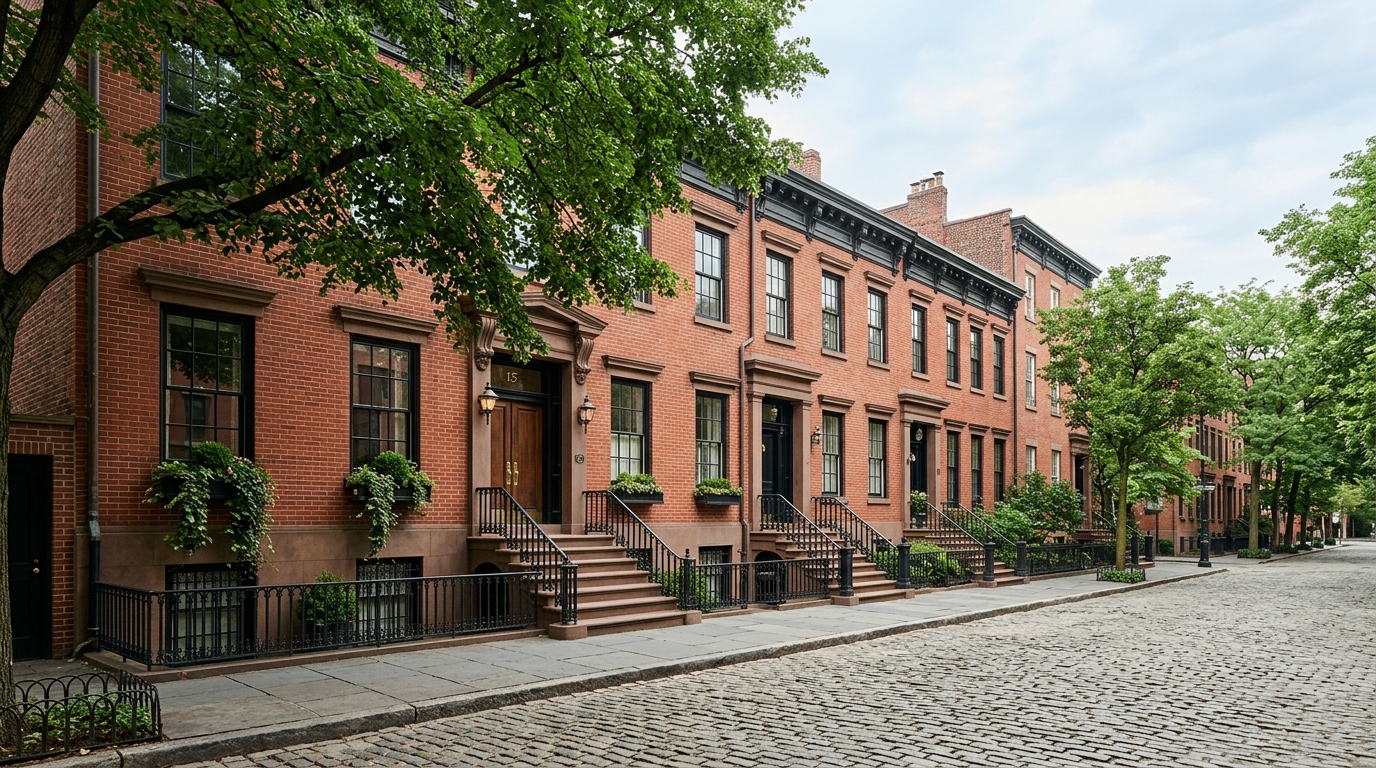
Location is the strongest factor that affect home value because it cannot be changed after purchase: a West Village townhouse on a quiet, tree-lined block like Charles Street commands more than an identical structure facing traffic on Seventh Avenue South. The physical property comes second, covering size, layout, condition, and age. Comparable sales come third, providing the market evidence that turns opinion into a defensible number; according to Opendoor's 2026 research, appraisers rely on homes sold within the past three to six months, ideally within about a mile. Market and economic conditions, including interest rates and inventory, come fourth and shift the whole market up or down at once. Homes.com's 2026 guide reinforces that these categories interact rather than act in isolation. The practical takeaway: fix what you can (condition, presentation), understand what you cannot (location, rates), and price against real closed comps. Some of these levers are within an owner's control and some are not. An owner can renovate a kitchen, restore a facade, or stage a parlor floor. An owner cannot move the building closer to the A/C/E line at West Fourth Street or quiet a fire station down the block. Sorting the controllable from the fixed is the first honest step in any valuation.
Location and Neighborhood Factors That Shape Value
Caryl Berenato treats location as the single most important factor in a property's value because it is permanent and priced into every comparable sale on the block. In downtown Manhattan, value shifts street by street, not just neighborhood by neighborhood. A SoHo loft on cobblestoned Greene Street prices differently than one two blocks east near the Broadway retail crush, even at identical square footage, because foot traffic, light, and quiet are all capitalized into the price.
Proximity to transit, parks, and school zones moves value in measurable directions. In Tribeca, closeness to Washington Market Park and the P.S. Neither is universally "better"; the buyer pool for each is different, and that pool sets the price.
Negative externalities reduce value in ways buyers underestimate. In practical downtown terms, that means a unit over a bar on Ludlow Street, a floor facing an elevated approach, or an apartment beside a 24-hour loading dock will appraise and sell below a quieter comparable. This is not a small adjustment; it is one of the few location penalties an owner cannot renovate away. Recent sale-to-list ratios in Park Slope, Brooklyn Heights, and Carroll Gardens were close to full ask source, which shows how block-level demand is priced in.
To verify location value, walk the block at three different times: a weekday morning, a Friday night, and a Sunday. Then check the closed sales on that exact street rather than the neighborhood median, because a single busy corner can separate two "comparable" listings by six figures. For a deeper read on how these dynamics play out building by building, our approach to valuing Manhattan luxury homes starts at the block level.
The Property Itself: Size, Layout, Condition, and Age
Caryl Berenato ranks the physical property as the second-strongest driver of value and the one an owner can most directly improve. Usable square footage, a functional layout, ceiling height, natural light, and outdoor space all carry weight, and in prewar downtown stock, original detail such as intact moldings and working fireplaces adds a premium that new construction cannot replicate.
Condition and age influence value through the lens of return on improvement, and not all upgrades pay back equally.
The condition-versus-cost tradeoff is not the same as "renovate everything." A move-in-ready SoHo loft attracts a broader, faster buyer pool than an estate-condition unit, but over-improving past the ceiling of the building or block rarely returns the spend. The categorical distinction to hold: condition is a value multiplier you control; a full luxury gut renovation is a lifestyle choice that you should not expect to fully recoup.
Age cuts both ways. Prewar character commands a premium in Greenwich Village and the West Village, but older mechanical systems, aging roofs, and deferred facade work drag appraisals down; Rocket Mortgage and HomeLight both flag deferred maintenance as a direct appraisal hit in their 2026 guidance. Verify the practical items before you rely on any value: request the building's roof age, boiler age, and any open violations, and for co-ops and condos, read the last two years of board minutes for pending assessments. If you are weighing the ownership structure itself, how Manhattan co-ops compare to condos changes both the financing and the resale math.
How Comparable Sales and Appraisals Establish a Baseline
Caryl Berenato uses comparable sales and appraisals to turn an opinion of value into a defensible number backed by evidence. An appraisal is an independent, licensed professional's estimate of market value; the National Association of Realtors defines it as an objective, unbiased opinion of a property's worth used by lenders to confirm the loan amount is supported by the asset. An appraisal is not the same as a listing price, and it is not the assessed value the city uses for taxes.
Appraisers build value from recent, nearby comparable sales. In downtown Manhattan the "mile" rule bends to reality: a Cobble Hill townhouse and a Tribeca loft are not comps despite being close, so the right comparison set is same-building, same-line, or same-block sales first.
The cost of a formal appraisal is modest relative to the stakes.
To verify a baseline yourself, ask your agent for the three to five closest closed sales, confirm each sold within the last six months, and note the adjustments made for floor, condition, and layout. That worksheet is the backbone of our Manhattan condo due-diligence process, because a value you cannot trace to real comps is a value you cannot defend at the negotiating table.
Market and Economic Conditions Buyers Should Weigh
Caryl Berenato tracks market and economic conditions that move every property's value at once, independent of anything an owner does to the home. Interest rates are the larger lever: when borrowing costs rise, buyer purchasing power falls, demand softens, and prices come under pressure; when rates ease, competition and prices firm. This is why a well-maintained Flatiron condo can be worth measurably more or less in the same year without a single change to the unit.
When downtown listings are scarce and selling quickly, sellers hold pricing power; when inventory builds and homes sit, buyers gain room to negotiate below ask. Recent sale-to-list ratios in Park Slope, Brooklyn Heights, and Carroll Gardens were close to full ask source, which shows buyers are paying fair prices but not giving much room for aspirational pricing. Rather than cite a stale figure, the honest move is to pull this week's active-versus-closed count for your specific submarket, because the balance in Hudson Yards can differ from the West Village in the same month. I'd quote a current absorption rate, but this market has been shifting, so call me for this week's read on your building or block.
Broader economic signals such as employment, wage growth, and consumer confidence feed the buyer pool over longer horizons, while local factors like new construction and zoning changes act closer to home. The categorical point: economic conditions are systematic risk you cannot renovate away, unlike condition, which you can. A current, dated read on where the cycle sits is the substance behind our Manhattan market advisory work, and it should inform whether you buy now or wait.
What Buyers and Owners Can Verify Before They Rely on a Value
Caryl Berenato shows every buyer and owner how to verify the drivers of value before trusting any estimate, and the checklist below is specific to downtown Manhattan. Online estimates from national portals vary widely because each uses a different algorithm, a different comp set, and stale or mismatched data; treat them as a starting range, not a number.
At a Glance: What To Verify Before Deciding
- Location, block-level: Walk the exact street on a weekday morning, Friday night, and Sunday; note noise, traffic, and light.
- Comparable sales: Confirm three to five closed sales within the last six months, same building or block first, per the comp window Opendoor (2026) describes. Neighborhood medians are too coarse for pricing.
- Physical condition: Request roof age, boiler/mechanical age, and open DOB or LPC violations; for landmarked townhouses in historic districts, confirm what exterior work is even permitted before assuming expansion potential.
- Ownership structure: For co-ops and condos, read the last two years of board minutes and confirm any pending assessments.
The factors that affect home value split cleanly into what you control and what you do not. You control condition, presentation, and, within limits, permitted improvements. You do not control location, interest rates, or the block's noise profile. Sorting your target property into those two columns, then pricing against real closed comps, is the single most reliable way to arrive at a value you can defend. If you want that sorting done for a specific address, our Manhattan buyer consultation starts exactly there.
Reviewed for freshness: July 2026.
Work With Caryl Berenato in New York
Caryl Berenato helps sellers price, prepare, and time a listing with a practical plan. The service area covers Tribeca, West Village, Greenwich Village, Soho, Noho, and East Village, and the next conversation can turn pricing strategy, preparation priorities, listing timing, and the current competing inventory into concrete next steps.
- Service areas: Tribeca, West Village, Greenwich Village, Soho, Noho, East Village, Flatiron, and Chelsea.
- Office or service-area location: 110 Fifth Avenue, 3rd Floor New York, NY 10011.
- Phone: (917) 804-7367
- Email: caryl.berenato@compass.com
- Google Business Profile: Caryl Berenato on Google Maps
- Contact: https://carylberenato.com/contact
Frequently Asked Questions
Caryl Berenato answers the questions buyers and owners ask most, drawing on the same drivers detailed above, including the Opendoor 2026 comp window of three to six months source.
What are the key elements affecting property values you should know?
Location, square footage, condition, building quality, and comparable recent sales in the immediate area all carry measurable weight in how a property is priced. In New York specifically, floor level, light exposure, and proximity to transit shift value as meaningfully as an extra bedroom. Zoning designations and any outstanding violations on a unit or building also factor in, in ways buyers don't anticipate until they're deep in due diligence.
What is the single most important factor in a property's value?
Location holds more weight than any other variable, and in New York, location operates at a granular level, meaning the difference between one block and the next, or one floor and the next, can translate to a meaningful price gap. A well-renovated apartment in a less desirable building or neighborhood will typically struggle to outperform a comparable unrenovated unit in a stronger location. Condition and finishes matter, but they rarely override where something sits.
Why do online home value estimates vary so much between websites?
Each platform uses a different algorithm, pulls from different public data sets, and updates at different intervals, so the inputs themselves aren't consistent across tools. In a market like New York, where co-op sales involve limited publicly recorded price data, automated estimates have even less reliable information to work from. Treat these figures as a rough orientation, not a pricing foundation; a comparative market analysis built from actual closed transactions in the same building or neighborhood will be far more accurate.
What is the difference between market value, appraised value, and assessed value?
Market value is what a buyer and seller agree to in an arm's-length transaction, it reflects current demand, comparable sales, and negotiation. Appraised value is a licensed appraiser's independent opinion, typically required by a lender to confirm the purchase price is supported before issuing a mortgage. Assessed value is set by the city for tax purposes and follows its own methodology, which means it can diverge significantly from what a property would actually sell for on the open market.
Which factors affecting property value can a homeowner control?
Condition and presentation are the most direct levers, updated kitchens and bathrooms, functional systems, and clean common areas in a co-op or condo all support stronger pricing. Resolving open permits or violations before listing removes risk that can cause buyers to discount an offer or walk away. What a homeowner cannot control includes location, building type, market timing, and what neighboring units sell for, which is why focusing capital improvements on areas that buyers in the specific building actually respond to matters more than general renovation trends.